Primary time servers synchronize the time with at least one other Primary time server or with a Reference time server, and they provide the time to Secondary time servers and directly to client workstations.
Primary time servers ``poll'' other Primary or Reference time servers and ``vote'' on a common network time. Primary time servers adjust their internal clocks to synchronize with that common network time. Because all Primary servers adjust their clocks, network time might drift slightly.
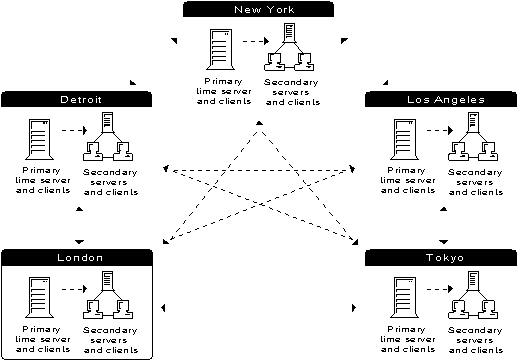
The following figure shows Primary time servers in various locations providing time to their respective Secondary time servers. Secondary time servers, in turn, provide time to their client workstations.
Primary Time Servers
You should place a Primary time server in each geographically distinct area so that Secondary servers and client workstations can access them without using WAN links.
Use Primary time servers on larger networks to increase Directory fault tolerance by providing redundant paths for Secondary time servers.
If a Primary time server goes down, the Secondary time server can get the time from an alternate Primary time server.
If you use Primary time servers, each one needs to be able to contact another Primary time server or a Reference time server to determine time on the network.